Enter your details and we will send the requested document to your inbox.





When many buyers first start working with fabrics, they often assume that “fiber content” determines everything.
For example, when they see a fabric labeled 100% polyester, they may think all polyester fabrics should feel more or less the same.
But once they receive actual samples, the difference can be very obvious.
Some polyester fabrics have a clean surface, a smooth hand feel, and good drape. These are often used for hotel curtains or medical cubicle curtains.
Other polyester fabrics feel softer and bulkier, almost like cotton. They are more suitable for sweatshirts, blankets, bedding, or home textile products.
In many cases, the key question is not simply whether the fabric is polyester. It is whether the fabric is made from filament yarn or staple fiber yarn.
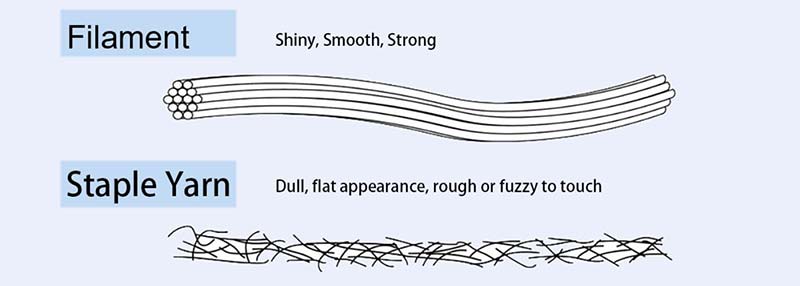
Filament is more like one continuous fiber. Staple fiber is more like many short fibers spun together into one yarn.
This single difference can change the whole character of a fabric.
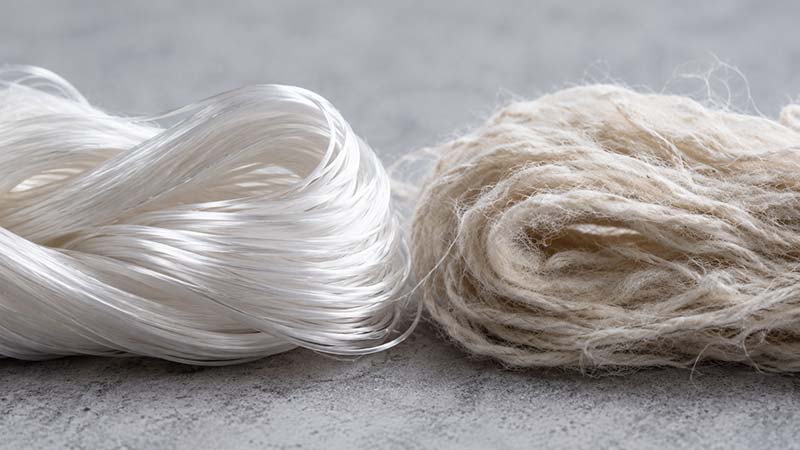
When selecting fabric samples in a factory, we often look at the fabric surface first.
If the surface looks clean, smooth, and has a clear drape, it is often made with filament yarn.
If the fabric feels softer, warmer, a little fuzzy, and more cotton-like, it is often made with staple yarn.
This is not always 100% true, but it is a very common difference.
Filament yarn is made from long, continuous fibers. Because the fibers are long, the yarn surface is usually smoother, with less hairiness. So the fabric often looks cleaner, smoother, and sometimes slightly shiny.
Staple yarn is different. It is made by spinning many short fibers together. Since the fibers are short, some tiny fiber ends naturally appear on the surface. This gives the fabric a softer, fuller, and more natural touch.
That is why polyester does not always feel the same.
Sometimes it feels smooth and drapey, like hotel curtain fabric.
Sometimes it feels soft and cotton-like, like a T-shirt fabric.
Filament is a continuous fiber with a very long length. It can be used directly as filament yarn, or processed through twisting, texturing, and other methods to create different fabric styles.
Among natural fibers, silk is a typical natural filament.
Among synthetic fibers, polyester filament and nylon filament are very common. Flame-retardant polyester filament is also widely used for curtains, medical cubicle curtains, decorative fabrics, and flame-retardant textiles for public spaces.
Common features of filament fabrics include:
These features are very useful in hotel curtain projects.
Curtains are not small fabric pieces. They are large-area hanging products. Whether the surface looks clean, whether the drape is smooth, whether the color remains stable, and whether the fabric is likely to become fuzzy or pilled later will all become more noticeable after installation.
In some hotel, hospital, and public space projects, we are more likely to recommend filament-type flame-retardant fabrics, especially inherently flame-retardant polyester filament fabrics.
The reason is not that filament sounds more premium.The difference between filament and staple fiber is not about how long the fibers are. It actually affects how the fabric feels, looks and how strong it is. It also affects how the fabric hangs if it pills, how well it washes and what it can be used for.
Filament is usually really smooth and clean. It also hangs nicely. Looks good. It is strong. Keeps its shape well. This makes it perfect for things like curtains, decorative fabrics and special textiles that need to be safe from fire. It is also great for projects that need to last a long time.
Staple fiber is usually softer and warmer. It feels more natural too. This makes it perfect for things like T-shirts, sweatshirts, bedding and blankets. It is great for things that need to be comfortable.
The best choice depends on what you’re making and what you need it for.
If you are buying fabrics that need to be safe from fire do not just look at what they’re made of and if they have certificates.
You need to think about the type of fiber how the yarn is made how the fabric is put together how it is finished how it is washed and what it will be used for. All these things affect how well the fabric will work in life.
If you are putting fabric in a hotel, hospital, school or theater it needs to be safe from fire.. It also needs to be able to withstand being used a lot being cleaned and looking good in big spaces.
That is why it is really important for buyers to understand the difference, between filament and staple fiber.
Filament and staple fiber are suitable for different products.
Hotel curtains need drape, surface stability, and durability.
A winter blanket needs softness, bulkiness, and warmth.
These two products should not be judged by the same standard.

The table below gives a simple comparison. In real sourcing, buyers still need to consider the application, weave structure, finishing process, and testing requirements.
| Comparison Point | Filament | Staple Fiber |
|---|---|---|
| Fiber length | Continuous and very long | Shorter; needs spinning |
| Surface appearance | Smoother, cleaner, less hairy | Softer, slightly fuzzy, more natural |
| Hand feel | Smooth, cool touch, good drape | Soft, warm, bulky |
| Strength | Usually more stable | More affected by fiber length, twist, and density |
| Pilling risk | Usually lower | Usually higher |
| Common applications | Curtains, decorative fabrics, functional fabrics, flame-retardant public space textiles | T-shirts, sweatshirts, bedding, blankets, warm home textiles |
Many buyers only look at fabric composition and ignore fiber form.
But in real applications, fiber form often determines the fabric’s long-term performance.
Two fabrics may look almost the same when they are new. But after a few months of use, the difference may become clear.
One fabric may still look smooth and clean.
The other may start to look fuzzy, pilled, or worn out.
This is often related to the yarn, fabric structure, finishing, and how the fabric is used.
Pilling is more common on fabrics made with short fibers.
These yarns are made by spinning many short fibers together. Some small fiber ends naturally stay on the surface. After washing, rubbing, or daily use, these tiny fibers may come out and form small balls on the fabric.
That is why some cotton-like fabrics, sweatshirts, blankets, and soft fabrics may start to look fuzzy after use.
Filament fabrics are different. They are made with long continuous fibers, so the surface usually has fewer loose fiber ends. Because of this, the fabric is less likely to pill badly.
Pilling is not about the fiber. The quality of the yarn how the fabric is made and what happens to it after that like if it gets rubbed or washed a lot all play a part.
For places like hotels, hospitals, offices and schools pilling is a deal. If the curtains or the fabric, on the walls starts to look fuzzy quickly the whole place can look old and worn out. This can also mean spending money to replace things.
So when it comes to picking fabrics for spaces people usually like filament fabrics because they stay looking cleaner for longer.
When it comes to the clothes we wear every day we usually care about how soft they’re how comfortable they feel and if they let air in.
Projects that need flame-retardant fabrics are different.
The fabric needs to look good, pass fire tests, and stay stable during real use. Buyers also need to think about washing, strength, color fastness, pilling, and batch consistency.
That is why many high-end flame-retardant curtains, hospital cubicle curtains, and public space decorative fabrics use filament yarns, especially inherently flame-retardant polyester filament.
In simple terms, inherent flame retardancy means the flame-retardant function is built into the fiber itself. It does not rely only on a surface treatment.
When this is combined with filament yarn, the fabric usually has a cleaner surface, better drape, lower pilling risk, and more stable flame-retardant performance.
These fabrics are often used for:
In many projects, we find that customers first focus only on whether the fabric can pass a flame-retardant test. Later, they realize that appearance and durability are just as important.
For example, if curtains do not hang well after installation, or if medical cubicle curtains become fuzzy after several washes, the customer experience will decline even if the flame-retardant report is acceptable.
Flame-retardant fabrics should not be judged only by certificates.
Certificates solve the compliance issue. Fiber and yarn structure determine the long-term user experience.
Although filament fabrics are common in public space flame-retardant decorative textiles, staple fiber flame-retardant fabrics are also valuable.
For some products that’re flame retardant staple fiber is still the best option.
For example workwear that is flame retardant fabrics that’re flame retardant and feel like cotton fabrics that are flame retardant and made from a blend of wool and warm textiles that are flame retardant often use staple fibers.
These flame retardant products care more about how comfortable they’re how soft they are how well they absorb moisture and how warm they are.
For workwear, uniforms, clothes that touch your skin, blankets or some things you use in your home it may be more important for them to feel soft and natural than to have a smooth surface.
So we should not just say that fabric made from flame filament is always better, than fabric made from flame retardant staple fiber.
It depends on what you’re going to use it for.
For curtains, hospital curtains, fabrics that are used for decoration and textiles that are used in spaces, the people who buy them usually care more about how they hang, how stable the surface is, if they pill a lot and how they look after a long time.
For clothes, blankets, bedding and warm textiles that are flame retardant the people who buy them usually care more about how soft they’re how comfortable they are how well they absorb moisture and how warm they are.
Different applications naturally require different material logic.
As mentioned above, buyers can make an initial judgment through surface appearance and hand feel. But for professional procurement, touching and looking are not enough.
This is especially true for flame-retardant projects. Buyers should ask suppliers to provide:
For hotels, hospitals, schools, theaters, or public building projects, buyers should also confirm the local flame-retardant standards required, such as NFPA 701, BS 5867, EN 13773, DIN 4102-B1, and others.
When Begoodtex develops or recommends flame-retardant fabrics, we do not only look at the composition label.
The same polyester works differently based on whether it is a filament or a staple fiber.
The same fabric that is flame retardant can be totally different depending on whether it’s treated after it is made or if it is flame retardant from the start.
The same fabric used for curtains may need solutions for different places like hotels, hospitals, theaters and vehicles.
For curtains in hotels curtains around hospital beds fabrics used to decorate spaces, blackout fabrics that are flame retardant and other textile projects we usually care more about the good things that come from filament structures. This includes how clean the surface is, how well it hangs, how strong it is, the risk of it getting fuzzy and how consistent it’s
For things like clothes, blankets, bedding or textiles, for the home that need to be soft and warm we might choose fiber or a mix of staple and other fibers depending on what we are making.
It is not very helpful to say:
“I need fabric made of polyester that is flame retardant.”
It is better to say:
“I want to make this product it will be used here it will need to be washed it needs to meet this flame standard and I want it to hang smoothly or feel like soft cotton.”
The clearly we explain what we need the easier it is for the people selling the fabric to decide if they should recommend filament, staple fiber or a combination of both.
The difference between filament and staple fiber is not about how long the fibers are. It actually affects how the fabric feels, looks and how strong it is. It also affects how the fabric hangs if it pills, how well it washes and what it can be used for.
Filament is usually really smooth and clean. It also hangs nicely. Looks good. It is strong. Keeps its shape well. This makes it perfect for things like curtains, decorative fabrics and special textiles that need to be safe from fire. It is also great for projects that need to last a long time.
Staple fiber is usually softer and warmer. It feels more natural too. This makes it perfect for things like T-shirts, sweatshirts, bedding and blankets. It is great for things that need to be comfortable.
One type of fiber is not always better than the other.
The best choice depends on what you’re making and what you need it for.
If you are buying fabrics that need to be safe from fire do not just look at what they’re made of and if they have certificates.
You need to think about the type of fiber how the yarn is made how the fabric is put together how it is finished how it is washed and what it will be used for. All these things affect how well the fabric will work in life.
If you are putting fabric in a hotel, hospital, school or theater it needs to be safe from fire.. It also needs to be able to withstand being used a lot being cleaned and looking good in big spaces.
That is why it is really important for buyers to understand the difference, between filament and staple fiber.
Filament is a continuous and very long fiber. Staple fiber is shorter and needs to be spun into yarn before being made into fabric. Filament fabrics are usually smoother and have better drape, while staple fiber fabrics are usually softer and bulkier.
Polyester filament is continuous polyester fiber. It is often used for curtains, decorative fabrics, and functional textiles. It usually has a smoother surface and more stable strength. Polyester staple fiber is made by cutting polyester into short fibers and spinning them into yarn. It feels more cotton-like and is often used for garments, bedding, and soft home textiles.
Staple fiber yarn contains many short fiber ends. During rubbing or washing, these fibers can move to the fabric surface and tangle into small balls. That is why staple fiber fabrics are usually more likely to pill than filament fabrics.
Filament fabrics usually have better drape, a cleaner surface, more stable strength, and lower pilling risk. Curtains are large-area hanging products, so these features help maintain a neat appearance and long-term performance.
No. Flame-retardant curtains, medical cubicle curtains, decorative fabrics, and public space textiles often use filament systems because they can better balance flame-retardant stability, drape, and appearance. But flame-retardant workwear, blankets, bedding, and comfort-focused products may also use staple fiber systems.
You can first check the surface and hand feel. A smooth, clean, drapable fabric with less hairiness is more likely to be filament. A soft, bulky, fuzzy, cotton-like fabric is more likely to be staple fiber. For professional sourcing, buyers should also confirm the composition, yarn type, and technical documents with the supplier.
Buyers should confirm the final application, fabric composition, yarn type, weight, width, flame-retardant standard, wash durability, color fastness, pilling performance, test reports, and bulk consistency. For public space projects, it is also necessary to confirm the specific fire safety standards required by the local authority or project owner.
