Enter your details and we will send the requested document to your inbox.





Quick answer: A flame retardant fabric manufacturer near Shanghai gives overseas buyers access to two major export ports, international air links and specialized textile clusters across Shanghai, Jiangsu and Zhejiang. The location improves sourcing and shipment options; the correct supplier still depends on whether the project needs industrial PPE, technical fibers or IFR polyester for curtains and contract interiors.
For overseas buyers, sourcing near Shanghai is valuable because material development, testing, production and export logistics can be coordinated within one connected region. This guide separates the decision into three questions: Why is the region logistically useful? Which local textile cluster matches the end use? When is BEGOODTEX relevant to the project?

| Location Advantage | Practical Value for Overseas Buyers |
|---|---|
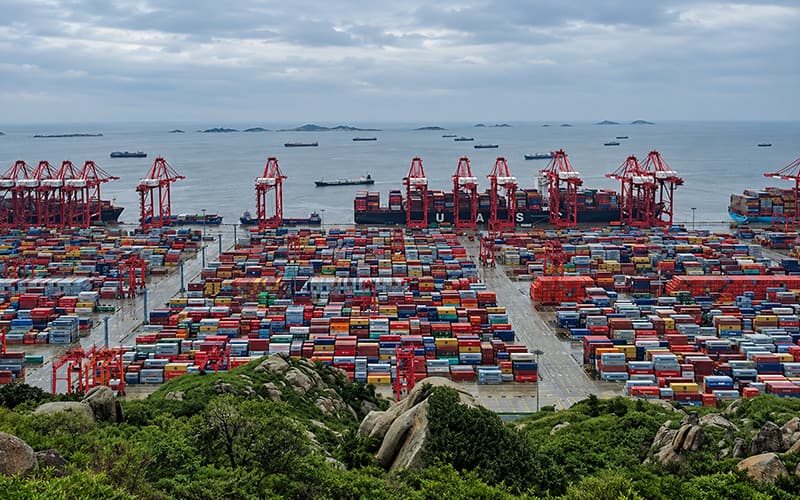
| Shanghai Port access | Shanghai Port handled more than 55 million TEUs in 2025 and remained the world’s busiest container port. Its scale gives exporters broad access to international container services. |
| Ningbo-Zhoushan Port access | Ningbo-Zhoushan Port handled more than 43 million TEUs in 2025. For factories in Zhejiang, it provides a second major export gateway within the wider region. |
| Route-by-route port choice | Two major ports allow the freight plan to be compared by destination, carrier, sailing date, available space, inland transport and current freight cost. This creates options; it does not guarantee that one port will always be cheaper or faster. |
| International air access | Pudong and Hongqiao airports support buyer visits, factory audits, project meetings and urgent sample or document movements. Shanghai scheduled an average of 772 international and regional flights per day for the 2026 summer-autumn season. |
| Sampling-to-shipment coordination | Factories, testing services, inspection teams and freight providers can be coordinated within one connected economic region. The actual lead time still depends on the fabric, test plan, quantity and production schedule. |
These logistics advantages explain why the region is convenient for international sourcing, but they do not determine which manufacturer is suitable. Supplier selection still depends on the end use, fiber system, fabric construction and required fire test.
The Yangtze River Delta is not one uniform textile base. Shanghai and parts of Jiangsu are more relevant to industrial PPE, functional fibers and high-performance protective materials. Shaoxing is more relevant to polyester weaving, dyeing, finishing, wide-width curtains and contract interiors. The right cluster is determined by the application—not simply by its distance from Shanghai.
| Area | Typical Textile Strength | Typical FR Direction | Relevant Buyer Needs |
|---|---|---|---|
| Shanghai and surrounding industrial area | Technical and industrial textile trading, development and project supply | Arc-protective and multi-risk workwear fabrics | Electrical utilities, petrochemical workwear and industrial PPE |
| Jiangsu | Functional fibers, yarns, protective fabrics and specialty textiles | Aramid, anti-static and high-performance protective materials | Thermal, mechanical and occupational protection |
| Shaoxing, Zhejiang | Polyester, weaving, dyeing, finishing and home or contract textiles | IFR polyester and functional interior fabrics | Curtains, blackout, upholstery, healthcare and transport interiors |
Shaoxing’s textile base covers upstream PTA and polyester, spinning, weaving, dyeing and finishing, as well as downstream clothing and home textiles.[4] For flame-retardant polyester buyers, the practical value is access to an established regional network for yarn supply, fabric development, coloration, finishing and bulk production.
The following examples show three industrial supplier directions within the region. They are not a ranking, and their capabilities should be verified against the current product and test documents.
Jiangsu Textile Research Institute Inc. represents the functional-fiber and protective-textile direction. Its business covers fibers, yarns, fabrics and protective clothing materials, making this supplier type more relevant to industrial safety garments, anti-static textiles and functional workwear than to decorative interior projects.
Wuxi Deep represents the Jiangsu technical-textile cluster associated with aramid, cut resistance and heat protection. This direction is suited to applications where thermal exposure and mechanical strength take priority. Buyers should confirm the precise fiber composition, construction and test data for the intended protective use.
Shanghai C&G Safety is positioned around industrial protective clothing, arc-flash protection and multi-risk workwear. It is more relevant to electrical, utility and petrochemical procurement, where the finished fabric or garment system, ATPV and the applicable protective standard must be evaluated together.
From specialist protection to broader project supply
The three suppliers above are mainly associated with industrial protection, functional fibers or high-performance PPE. BEGOODTEX follows a different route. Based in Shaoxing, it focuses on flame-retardant textile development for a wider range of commercial applications, with inherently flame-retardant polyester as a core material platform. Its products extend across curtains, blackout, upholstery, healthcare, transport, event textiles, apparel and selected protective or high-heat uses. For buyers, the key distinction is whether the project needs a highly specialized protective-textile supplier or a supplier that can support multiple applications, fabric constructions and project specifications.
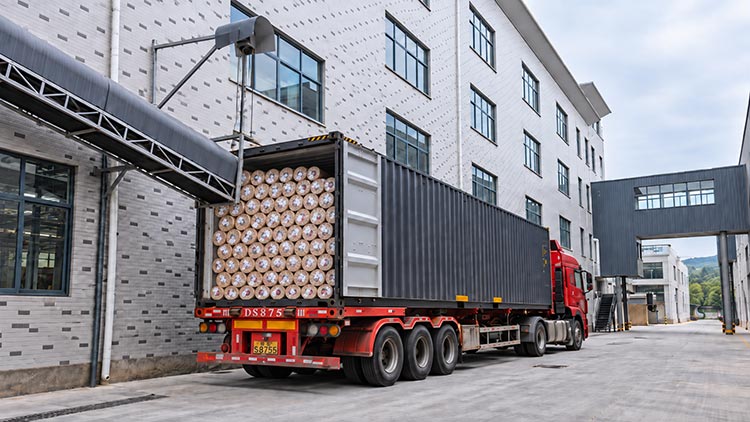
Established in Shaoxing in 2013, BEGOODTEX develops and supplies flame-retardant and selected fireproof textiles for interiors, hospitality, healthcare, transport, apparel, protective uses and other commercial projects. For buyers looking for a flame retardant fabric manufacturer near Shanghai, its main advantage is the ability to match the material system, fabric construction, function and test documentation to the end use, then support the project from samples and customization through bulk production.
Inherently flame-retardant polyester remains a central capability, covering constructions such as blackout, dimout, velvet, jacquard, mesh, voile, upholstery and medical curtain fabrics. Because the flame-retardant function is incorporated into the fiber system, it is suited to projects where durability and repeat supply matter. The exact performance still depends on the finished fabric and its test report.
The wider material range includes inherently flame-retardant nylon, viscose and modacrylic; selected durable flame-retardant wool, cotton and linen; and high-heat or fireproof materials such as aramid, oxidized PAN and fiberglass. This allows BEGOODTEX to discuss different risk levels and end uses rather than presenting one polyester fabric as a universal solution.
Interiors and hospitality: The range includes curtains, dimout and blackout fabrics, upholstery, bedding, event textiles and decorative contract fabrics. Selected curtain constructions are available at 300 cm width, while measured opacity values such as ≥95% dimout or ≥99.9% blackout are stated only for the articles that support them.
Stage and public venues: Velvet, masking, scrim, backdrops and wide-format stage fabrics are evaluated by width, weight, opacity, hanging behavior and the venue’s required fire test.
Healthcare and transport: Medical cubicle curtains, mesh and healthcare textiles address privacy, cleaning and project specifications, while transport interior textiles are selected according to the vehicle application and the required test method, requirement set and hazard level.
Apparel and protection: Children’s sleepwear, workwear and protective textiles require different fiber systems and standards. BEGOODTEX’s broader portfolio allows the material direction to change with the risk—from flame-retardant polyester or modacrylic for selected apparel to aramid, oxidized PAN or fiberglass for higher-heat applications.
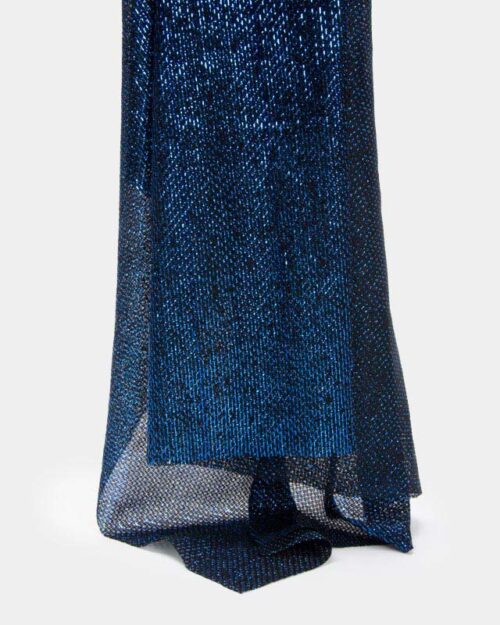 Flame Retardant Metallic Fabric 75 g/m² for Stage Curtains OEKO-TEX Certified Wholesale Supply
 Inherent Flame Retardant Wear-Resistant Transit Bus Seat Cover Textile for Project Sourcing | 600 g/m² | 150 cm | CAL TB 117
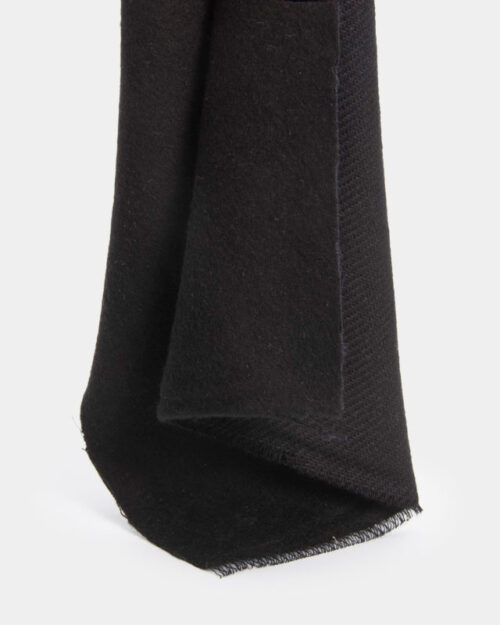 Black Polyester Velvet Curtain Fabric with Blackout and Inherent Flame Retardancy for Stage Use | 320 g/m² | 300 cm | EN 13773 Class 1
BEGOODTEX states a 5,000 m² factory and monthly production capacity above 500,000 metres. These figures matter because commercial buyers need more than a sample: they need a confirmed specification, controllable bulk production and support for repeat orders. Color, g/m², width, construction, hand feel, backing, coating and selected functions can be discussed according to the project.
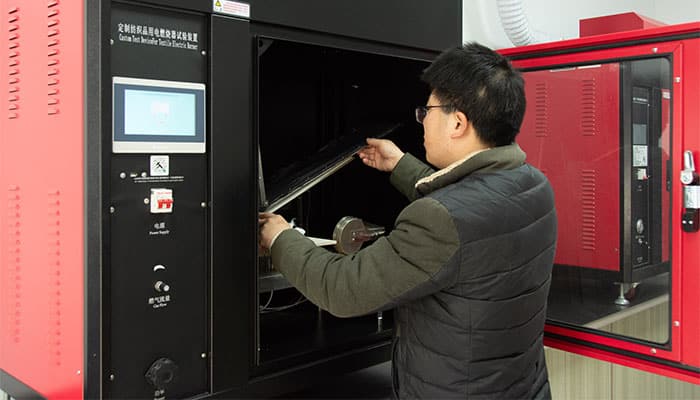
An in-house flame-retardant laboratory supports development and sample screening, while more than 100 available test reports provide a documentation base for different products and markets.
BEGOODTEX’s Shaoxing location connects its projects with a mature network for polyester, yarn, weaving, dyeing, finishing and home or contract textiles. International buyers can combine supplier visits and sample review in the Yangtze River Delta with air access through Shanghai and shipment planning through either Shanghai Port or Ningbo-Zhoushan Port. This regional position supports coordination, while the final route and delivery schedule remain order-specific.
BEGOODTEX can support flame-retardant testing and documentation for different applications and export markets. The standards below are only a selection of commonly requested options; additional test methods and market-specific requirements can be discussed according to the fabric and project.
| Example Testing Support | Typical Project Direction |
|---|---|
| NFPA 701 | Curtains, drapes and decorative textiles |
| BS 5867-2 Type C | Curtains, drapes and window blinds |
| EN 13773 Class 1 | Curtains and drapes |
| DIN 4102-B1 | Interior and building-material applications |
| NF P 92-503 / M1 | French reaction-to-fire requirements |
| CAN/ULC-S109 | Flame-resistant fabrics and films |
| EN 45545-2 | Railway interior materials and components |
The exact method, classification and report applicability should still be confirmed for the selected product. See BEGOODTEX’s textile standards guide and certification and test report resources for more testing information.
Choose the region for its logistics options, then choose the supplier by material and application. Shanghai and Jiangsu remain strong starting points for specialized industrial PPE, technical fibers and high-performance protection. BEGOODTEX offers a broader project-supply route from Shaoxing: inherently flame-retardant polyester as a core capability, additional flame-retardant and fireproof material systems, application-based development, in-house screening, product-specific documentation, customization and bulk production. The final decision should still be based on the approved sample, exact specification, applicable report, quantity and delivery plan.
No. Shaoxing is a city in Zhejiang province. It is part of the wider Yangtze River Delta economic region and is connected to the Shanghai–Hangzhou–Ningbo transport and manufacturing network. This allows buyers to use Shanghai’s international connectivity while sourcing from Shaoxing’s textile cluster.
There is no universal answer. The freight forwarder and supplier should compare the destination, carrier, route, sailing date, available space, inland transport and current freight cost for the specific order.
No. Location improves access to manufacturing and logistics resources, but compliance and delivery still depend on the exact fabric, applicable test method, production capacity, quality control and shipping schedule.
BEGOODTEX can support testing and documentation for different markets and applications, including examples such as NFPA 701, BS 5867-2 Type C, EN 13773 Class 1, DIN 4102-B1, NF P 92-503 / M1, CAN/ULC-S109 and EN 45545-2. These are only examples; the exact method and classification should be confirmed for the selected fabric and project.