Enter your details and we will send the requested document to your inbox.





Choosing between brushed fabric, fleece, and velvet is rarely a question of “which is best”—it is a question of matching construction, fiber, and finish to the job. A brushed fabric earns its softness from a mechanical finishing process, fleece is a knit polyester structure engineered for warmth, and velvet is defined by an upright pile woven or knitted into the cloth. This guide breaks down 13 critical differences so buyers can specify the right material for apparel, upholstery, drapery, and commercial projects.
In short: Brushed fabrics and fleece get their soft surface from raised fibers (a nap); velvet gets its luxury look from an integrated pile. Fleece is knit and hydrophobic, flannelette is woven cotton, and velvet spans woven and knitted varieties with very different price and care profiles.
Every textile decision starts with one distinction: a fabric’s construction (how yarns are interlaced) versus its finishing (what happens after). Weaving interlaces warp and weft yarns at right angles, giving stable, shape-holding cloth. Knitting forms interlocking loops from a single yarn, giving natural stretch. Finishing then changes hand-feel and performance—brushing a woven cotton sheet turns it into flannelette, while brushing a knit polyester turns it into polar fleece. A brushed fabric and a fleece can feel identical to the touch, yet their underlying structures (and therefore stretch, drape, and durability) stay completely different.
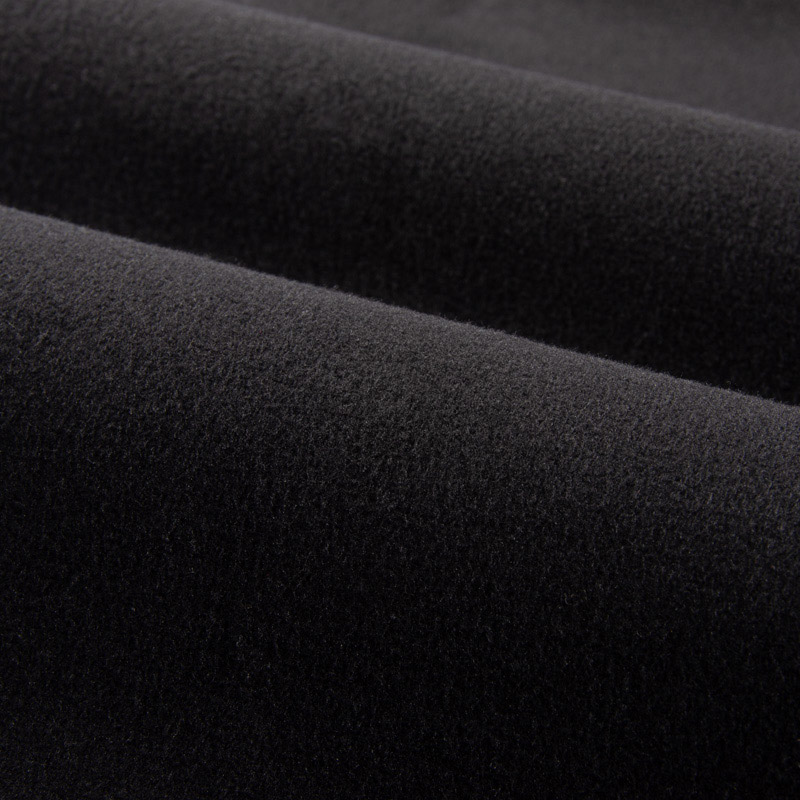
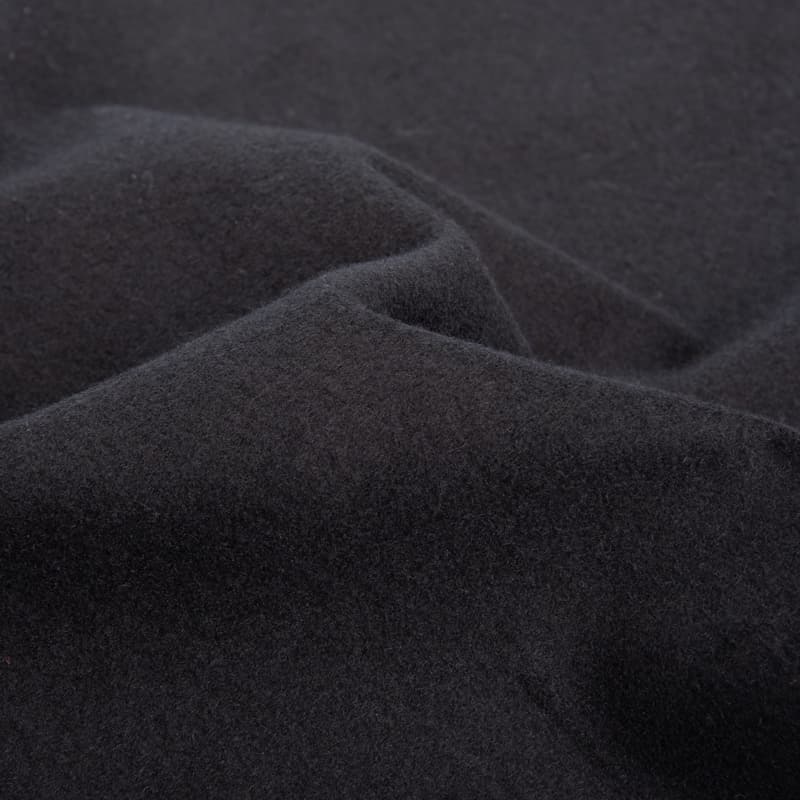
“Brushed fabric” is a category defined by a process, not a fiber. Cloth is pulled over fine metal rollers that lift surface fibers into a soft nap, trapping air for insulation and a cozy hand. The base cloth can be cotton, polyester, or blends, and the same finishing step works on either weave or knit.
Flannelette is the classic brushed cotton: lightweight to medium-weight, brushed on one or both sides, and the material of winter pajamas, baby blankets, and warm sheets. It stays breathable while the nap adds warmth. You can browse the full flannelette range for both standard and FR weights.
Suede fabric (suedette or microsuede) starts from a tight polyester microfiber cloth, then is abraded to raise a dense, leather-like nap. Being synthetic, it resists stains and water better than animal suede and cleans easily—ideal for synthetic suede upholstery and apparel.
| Feature | General Brushed Fabric | Flannelette | Suede (Microsuede) |
| Primary Definition | A finishing process | A type of brushed fabric | A brushed microfiber fabric |
| Common Fiber | Cotton, Polyester, Blends | Cotton | Polyester Microfiber |
| Typical Construction | Woven or Knit | Woven (Plain/Twill) | Tightly Woven or Knit |
| Key Characteristic | Soft, fuzzy nap | Soft, warm, breathable | Dense nap; mimics leather |
| Primary Applications | Shirting, Linings, Bedding | Pajamas, Sheets, Baby Items | Upholstery, Apparel, Accessories |
Explore the complete brushed fabric category for FR and non-FR options.
 Inherent Flame Retardant Knitted Brushed Oxidized PAN Fabric for Industrial Workwear Applications | 360 g/m² | 170 cm | EN ISO 11612
 Flame Resistant Brushed Fabric in Black for Wholesale Stage and Theatre Projects with Bulk Order Support | 280 g/m² | 150 cm | EN 13773 Class 1
 Inherent Flame Retardant Black Brushed Polyester Fabric for Theatre Pricing with Bulk Order Support | 430 g/m² | 150 cm | EN 13773 Class 1
Unlike a brushed fabric, fleece is engineered as a knit from the start. Almost all fleece is a polyester pile knit: loops are sheared and brushed into a deep, air-trapping pile. Because the base is knit, fleece stretches; because it is polyester, it repels water and dries fast.
Polar fleece is the double-sided, lightweight insulator that launched the category—high warmth-to-weight, machine-washable, cheap to produce. Coral fleece has a higher, denser, plusher pile for luxury blankets and robes. Double-sided fleece simply means napped on both faces. Loop fleece (French terry) keeps uncut loops on the reverse, making it lighter and more moisture-wicking than pile fleeces—perfect for sweatshirts and loungewear. See polar fleece and coral fleece for bulk and OEM supply.
| Feature | Polar Fleece | Coral Fleece | Loop Fleece (French Terry) |
| Construction | Pile Knit, Brushed Both Sides | High-Pile Knit, Brushed Both Sides | Knit with Loops on Reverse |
| Texture | Soft, dense nap | Very plush, velvety | Smooth face, looped back |
| Warmth-to-Weight | Excellent | Very Good (heavier) | Moderate |
| Moisture Handling | Hydrophobic, fast-dry | Hydrophobic, fast-dry | Absorbent loops wick moisture |
| Stretch | Good (2-way) | Good (2-way) | Very Good (often +spandex) |
| Primary Applications | Jackets, Blankets, Outdoor | Robes, Luxury Blankets | Sweatshirts, Joggers, Loungewear |
| Pilling Potential | Moderate to High | Lower than Polar | Very Low |

Velvet is defined by a dense, uniform pile of cut yarns, giving deep luster and a directional hand. Traditional woven velvet uses double-cloth weaving: two layers are woven at once, then a blade slices the connecting yarns, leaving each layer with an even cut pile. Cotton and synthetic velvets add durability and stain resistance; silk versions remain the luxury standard.
Knitted variants trade some density for stretch and affordability. Velour is the common knit velvet—soft, plush, shorter pile, famous in tracksuits. Dutch velvet is a warp-knitted polyester velvet prized for a smooth, dense, short pile and subtle sheen; it resists crushing and stains, making it a go-to for modern Dutch velvet upholstery and curtains.
The combination of construction, fiber, and finishing drives 13 measurable differences.
1. Foundational structure (knit vs. woven). A brushed fabric can be woven (flannelette) or knit (brushed polyester); fleece is always knit; velvet spans both. Woven cloth holds shape and resists stretch along the grain—essential for tailored blazers and sofa upholstery. Knit cloth has built-in mechanical stretch that moves with the body.
2. Texture source (pile vs. nap). A pile is yarn integrated during weaving or knitting and anchored into the base, giving velvet its upright tufts and directional sheen. A nap is existing surface fiber raised by brushing—non-directional, fuzzy, and prone to matting. A brushed fabric and fleece share this napped surface.
3. Fiber composition. Flannelette is almost always cotton (breathable, hydrophilic, slow-dry). Fleece and modern velvets are polyester-dominant (hydrophobic, durable, less breathable, can retain odor). A brushed fabric built from cotton behaves nothing like one built from polyester.
4. Thermal insulation. Fleece’s deep pile traps the most air per gram—best warmth-to-weight, and it insulates even when damp. A brushed fabric such as flannelette gives moderate, more “cozy” warmth suited to indoor use; velvet sits in between.
5. Durability and pilling. Filament-polyester woven velvets and microsuede withstand hundreds of thousands of double rubs for contract use. Standard polar fleece pills; anti-pill versions and loop fleece resist it far better. A brushed fabric made from staple cotton can also pill with repeated washing.
6. Moisture management. Polyester fleece wicks and dries fast but can feel clammy in high exertion. A brushed cotton flannelette absorbs moisture, feels comfortable dry, but saturates and loses insulation when wet.
7. Stretch and drape. Knit fleece and velour offer two-way stretch and fluid drape. Woven velvet and flannelette have minimal stretch and a structured, sculptural hang. A brushed fabric drapes according to its base weave, not its nap.
8. Care and maintenance. Fleece and flannelette are machine-washable (low heat). Traditional silk or rayon velvet often needs dry cleaning; modern polyester velvets like Dutch velvet tolerate gentle water-based care.
9. Aesthetic and luster. Velvet’s pile creates unmatched depth of color and a shifting sheen. Fleece and a brushed fabric read matte, soft, and understated—better for casual and functional goods.
10. Common applications. Flannelette owns sleepwear and sheets; fleece dominates outdoor mid-layers and athletic wear; velour suits loungewear; woven velvet anchors formalwear and statement upholstery. A brushed fabric fills the everyday middle: linings, shirting, and bedding.
11. Cost and market price. Polar fleece is among the cheapest warm fabrics thanks to fast, optimized knitting. Traditional woven velvet is a luxury good—slower double-cloth weaving plus premium fibers. Velour and Dutch velvet sit in the middle. A brushed fabric is generally inexpensive unless the base cloth is premium.
12. Environmental impact. Polyester fleece sheds microplastics in washing; rPET and GRS-certified recycled polyester cut virgin-plastic use. Cotton is biodegradable but water-intensive to grow. A brushed polyester fabric carries the same microfiber concern as fleece.
13. Flame retardancy. For contract and public spaces, FR is the deciding factor. A topical finish is cheaper but washes out; inherently flame-retardant polyester builds protection into the fiber for lifelong performance. Standards such as NFPA 701 (US drapery), BS 5867 (UK curtains), and BS 5852 (upholstery) define pass levels—see the NFPA 701 overview for details, and pair any selection with our flame-retardant fabric selection guide.
Construction and fiber. Fleece is a knit polyester fabric engineered for lightweight warmth and fast drying. Flannelette is a woven cotton fabric brushed for softness, offering breathable, cozy warmth.
It depends on the fiber. Traditional silk or rayon velvet should be dry-cleaned. Modern polyester velvets like Dutch velvet are often machine-washable on a gentle cycle—always check the care label and air-dry to protect the pile.
Both insulate well. Coral fleece feels plusher and warmer at first touch due to its denser pile; polar fleece wins on warmth-to-weight and lower bulk, making it the active-outdoor favorite, while coral fleece leads for blankets and loungewear.
Pilling happens when surface fibers break and tangle from friction. Choose “anti-pill” labels, wash fleece inside out on a cool gentle cycle, keep it away from abrasive items like towels, and air-dry rather than tumble-dry.
Dutch velvet is a warp-knitted polyester velvet with an exceptionally smooth, dense, short pile and subtle modern sheen. It is highly durable and stain-resistant, which is why it is widely used for contemporary upholstery and home decor.
You cannot tell by touch. The only reliable proof is manufacturer documentation showing it passed tests such as NFPA 701 or BS 5867. Inherent FR means the property is part of the fiber itself and will not wash out.
Not exactly. “Brushed fabric” is the broad process-based category; flannel (and lighter flannelette) is a specific type that is almost always brushed. All flannel is a brushed fabric, but brushed polyester or brushed twill are also brushed fabrics.
A fabric’s identity is its fiber plus its construction plus its finish. Flannelette gives breathable cotton comfort from a simple brushed weave; fleece is modern knitting engineering for maximum warmth at minimum weight; velvet—woven or knitted—delivers depth and luxury from an upright pile. A brushed fabric remains the versatile everyday workhorse, equally at home in linings and bedding. Match stretch to joggers, durability to family sofas, warmth to winter blankets, and certified safety to public theaters. Move past surface softness to the structural differences, and your specification will be both beautiful and functionally sound.
Related reading: