Enter your details and we will send the requested document to your inbox.





Visibility is the difference between safety and a serious accident. In industries like road construction, aviation, or logistics, being seen by a vehicle operator is a worker’s primary defense. Yet not every bright vest qualifies. A “neon” vest from a supermarket is not the same as professional-grade EN 20471 compliant workwear.
Featured snippet: EN 20471 (officially EN ISO 20471) is the European and international standard for high-visibility warning clothing. It sets the minimum areas of fluorescent background material and retroreflective tape a garment must carry, and where they must sit on the body, so the wearer stays recognizable as a person in daylight, low light, and darkness. Garments are rated Class 1, 2, or 3 by total visible area, with Class 3 reserved for the highest-risk, high-speed environments.
This guide explains the technicalities of the EN 20471 standard, how the material layers work, and how to select the right protection level for your specific work environment.
EN 20471 is the international safety standard for high-visibility warning clothing. It specifies the requirements for personal protective equipment (PPE) that signals the user’s presence visually. Whether it is bright sunshine, fog, or total darkness, the standard ensures the wearer is conspicuous to operators of vehicles or other mechanized equipment.
Originally published as EN 471, the standard was updated and reissued as EN ISO 20471 in 2013 to harmonize it globally. It defines how much fluorescent material and retroreflective tape must be used, and where it must be placed, to guarantee “human shape” recognition from every angle. For the wider context of how such gear works, see the background on high-visibility clothing.
The core goal is simple: make sure workers can be seen in any lighting condition, 24 hours a day, and reduce the risk of collisions in hazardous environments.

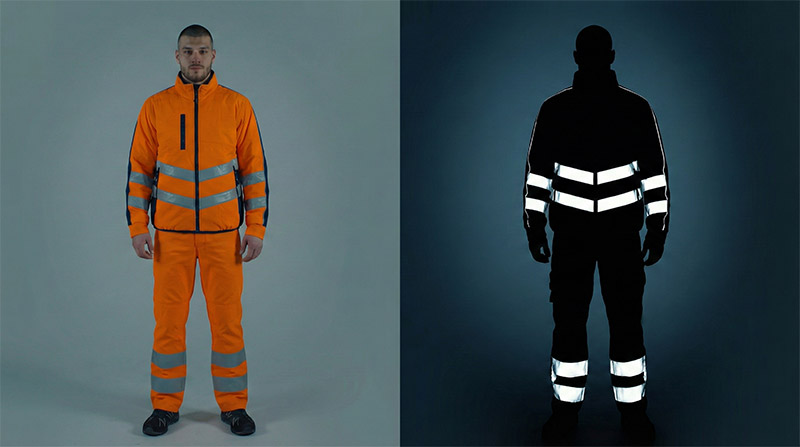
Compliant clothing achieves 24-hour protection by combining two distinct materials. They are not interchangeable — each plays a specific role tied to the light source available.
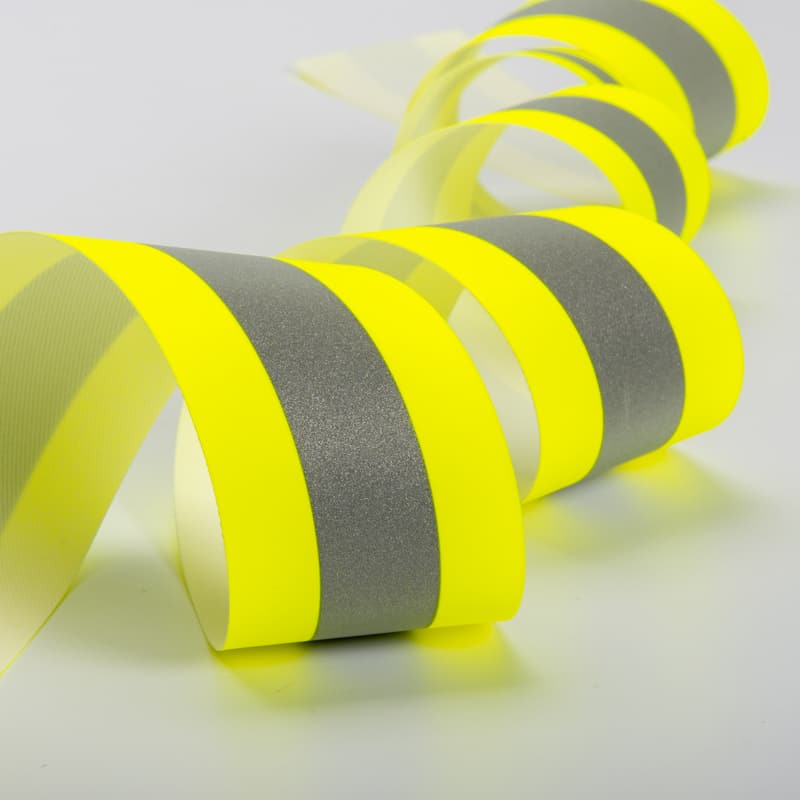
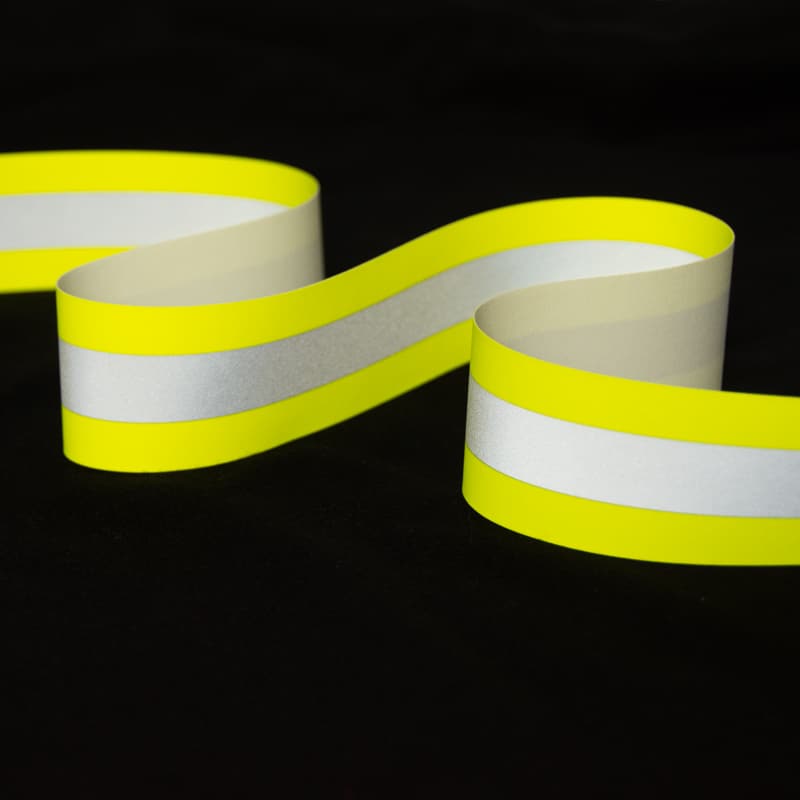
Fluorescent background material (daytime). This is the primary body fabric of the garment. Fluorescent textiles absorb invisible ultraviolet (UV) light from the sun and re-emit it as visible light, so the fabric looks far brighter than an ordinary colour even in flat light, mist, or dusk. The standard permits three colours: fluorescent yellow, orange-red, and red. Begoodtex supplies a fluorescent inherent flame-retardant polyester fabric that keeps this daytime glow while meeting FR needs on mixed-risk sites.
Retroreflective material (nighttime). These are the silver strips or tapes applied on top of the background fabric. Using glass-bead or micro-prism technology, they bounce light from a source such as truck headlights directly back to that source. Without these tapes a worker is effectively invisible at night, no matter how bright the body colour.
A garment is only EN 20471 certified when it contains both materials. A bright neon shirt with no tapes, or a dark jacket with only tapes, will fail the safety audit.
| Material component | Role in garment | Primary function | Optimal conditions |
| Fluorescent fabric | Main body / base layer | Daytime visibility | Fog, rain, sunlight |
| Retroreflective tape | Applied strips / accents | Nighttime visibility | Darkness, headlights |
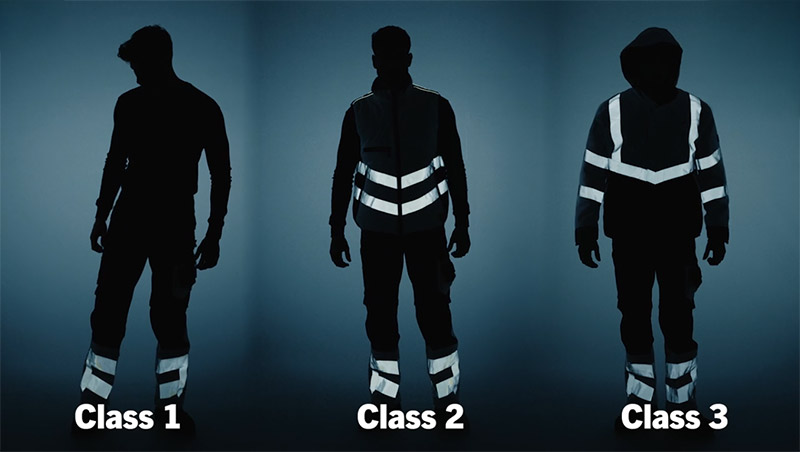
The standard sorts clothing into three classes by the minimum surface area of visible material. The higher the class, the more conspicuous the worker is to a driver — and the higher the risk environment it covers.
| Requirement | Class 1 | Class 2 | Class 3 |
| Fluorescent body fabric | 0.14 m² | 0.50 m² | 0.80 m² |
| Reflective tape area | 0.10 m² | 0.13 m² | 0.20 m² |
Meeting the surface-area minimum is not enough. EN 20471 tightly regulates material layout so the wearer reads as a human being rather than a static object.
The base fabric drives both compliance and wearer comfort, and these garments face heavy industrial use. Three choices dominate.
Begoodtex offers professional fabrics that balance fluorescent colour fastness with industrial durability, including options that integrate flame-retardant and anti-static properties in one cloth. The cotton-blend series adds breathability and moisture wicking without sacrificing strength, so comfort holds up in demanding conditions.
EN 20471 is the European and international standard; ANSI/ISEA 107 is its United States equivalent. Both aim to protect workers through visibility, but their retroreflectivity test methods and classification logic (types vs classes) differ slightly. For global projects, confirm the garment meets the specific standard your local law requires — and review our FR fabric comparison guide when weighing fibre choices for protective workwear.
EN 20471 is a life-saving technical standard that balances fabric science with strategic design. To stay fully compliant:
For sites that need visibility plus fire safety in one garment, explore our fluorescent two-tone flame-retardant reflective fabric and talk to the team about OEM specifications.
Yellow is technically brighter (higher luminance), while orange gives better contrast in green settings like forests or fields. Both are fully compliant under EN 20471.
No. EN 20471 compliance requires both the fluorescent body fabric for daytime and the retroreflective tapes for nighttime.
Check the care label. Most garments are certified for 25 to 50 washes. Beyond that, the reflective tape’s performance can drop below the safety threshold.
Replace the garment. Cracks mean the glass beads or prisms are damaged, which sharply reduces nighttime visibility.
Yes. EN ISO 20471 is the modern international version, with stricter requirements for recognizing the human shape.