Enter your details and we will send the requested document to your inbox.





Flame retardant mechanism refers to the physical and chemical actions that slow or stop fabric combustion. FR treatments work by absorbing heat, forming a protective char layer, releasing non-combustible gases, or capturing the free radicals that drive the flame reaction — interrupting the combustion chain before it spreads.
Every year fires cause thousands of deaths and billions in losses worldwide, and textile flammability is a major contributor in homes, transport, and workplaces. A flame retardant mechanism is what turns a fabric from fuel into a barrier. Understanding how these mechanisms work helps buyers specify the right FR textile and trust the standards behind it.
Flame retardancy is the ability of a material to slow or prevent combustion. It can be inherent — built into the fiber chemistry — or achieved through post-processing finishes. Either way, the goal is the same: prevent the chain reaction of burning. The specific flame retardant mechanism — whether locked in the fiber or applied as a finish — determines how completely that chain is broken.
Research shows FR fabrics extend escape time by 10 to 15 times compared with untreated cloth, while cutting the heat and toxic smoke released during combustion. That margin is the difference between a survivable incident and a tragedy.
Fire needs three things: heat, oxygen, and fuel. A fabric ignites when a heat source raises its temperature enough for fibers to break down and release flammable gases, which then mix with oxygen and burn. This is where the flame retardant mechanism intervenes — at every stage of that chain.
Different fibers decompose differently. Cellulose fibers (cotton, linen, bamboo) burn quickly and keep burning. Protein fibers (wool, silk) shrink and are harder to ignite. Synthetic fibers (polyester, nylon) melt and drip, sometimes spreading molten material. A compact view:
| Fiber type | Behavior near flame | In flame | After flame |
| Cellulose (cotton, linen) | Non-melting, rapid burn | Burns steadily | Soft gray-black residue |
| Protein (wool, silk) | Shrinks or curls | Slow, self-extinguishing | Crisp black-gray |
| Synthetic (polyester, nylon) | Melts then burns | Black smoke, melt drips | Hard glassy bead |
Cellulose decomposition runs in three stages — initial breakdown below 370 °C, main breakdown at 370–430 °C, and final cracking above 430 °C. Flame retardant treatment reduces the number and amount of flammable pyrolysis products released, which is exactly why FR cotton resists ignition better than raw cotton.
A complete flame retardant mechanism usually combines several of these actions at once:
In practice, FR finishes almost always rely on synergy: a phosphorus char layer plus a gas-phase radical trap gives far better protection than either alone.
The flame retardant mechanism differs by chemical family:
If you want to see these principles in a single fiber, our guide to how flame retardant technology is applied in polyester fabric covers copolymerization and finishing in detail — a clear example of the flame retardant mechanism at work.
There are essentially two ways to build a flame retardant mechanism into a textile:
Synthetic fibers such as flame retardant nylon are often modified during spinning, while cellulosics like cotton rely on durable finishes. For high-heat industrial use, engineered materials such as oxidized PAN aramid composite deliver permanent protection. Natural options are covered in our flame retardant wool fabric guide.
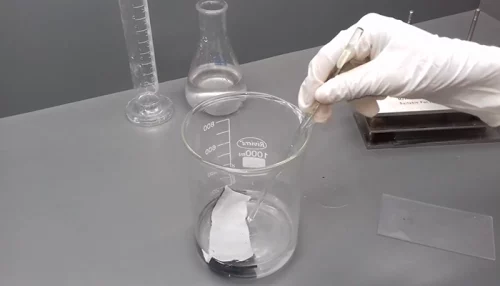
Laboratories confirm FR performance with several standard methods:
Each flame retardant mechanism leaves a measurable signature in these tests, which is why a single number like LOI can summarize so much chemistry.
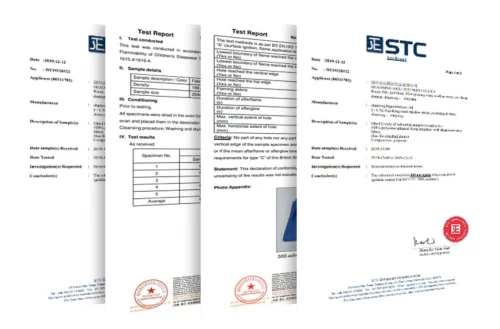
Global requirements vary by region — the U.S. uses NFPA and CFR rules, the U.K. uses BS standards, and the E.U. and China use EN and GB methods. Our post on flame retardant testing standards across the U.S., E.U., and China maps the major ones, and you can review certification and test reports for specific products.
The future of FR textiles is moving in two clear directions. First, low-toxicity, low-smoke, and pollution-free retardants — such as FR 100% cotton and FR 100% viscose that are biodegradable and formaldehyde-free. Second, multifunction: combining flame retardancy with antibacterial, waterproof, UV-resistant, anti-static, or medical-grade performance in a single fabric.
Explore the range of multifunctional FR fabrics to see how a single textile can meet several safety specs at once — the flame retardant mechanism evolving from one function into a full system solution.
It is the set of physical and chemical actions — heat absorption, char-layer formation, non-combustible gas release, and free-radical capture — that interrupt the combustion chain and stop fabric from sustaining a flame.
The major families are halogenated, inorganic phosphate, phosphate ester, phosphorus-nitrogen, and inorganic fillers, often paired with synergists such as antimony trioxide for stronger effect.
Inherent FR is built into the fiber during production and lasts the product lifetime; treated FR is a surface finish that is cheaper to apply but can degrade with washing and affect fabric hand.
Common methods include Limiting Oxygen Index (LOI), vertical burning, 45° incline burning, and surface burning tests, referenced by standards such as NFPA, BS, EN, and GB.
Modern certified FR textiles are designed to be non-irritating and compliant with safety regulations; the deeper toxicology question is examined in our post on whether flame retardant fabric is toxic.
A flame retardant mechanism is not a single trick but a coordinated set of heat, gas, and surface actions that rob fire of fuel and oxygen. Whether through inherent fiber chemistry or a durable finish, the result is the same: more escape time, less smoke, and a safer built environment.
Browse the full flame retardant fabric collection to find certified options for your project.
Related reading


