Enter your details and we will send the requested document to your inbox.



When people think of mesh fabric, the first word that usually comes to mind is breathable.
You see it in sports T-shirts, vests, shoes, bags, seats, workwear linings, hospital cubicle curtains, and car interiors. It is light, thin, full of small openings, and easy for air to pass through. That is why mesh fabric is often connected with comfort, cooling, and flexibility.
But once mesh fabric is used in industrial clothing, public spaces, transport interiors, or protective garments, another question becomes much more important:
Will it burn easily?
That is a fair question.
Mesh fabric has many small openings. These openings are what make the fabric light and breathable. But when the material is close to heat or flame, other details also matter: the fiber, hole size, fabric weight, structure, and finishing method.
Two mesh fabrics may look almost the same, but their fire performance can be completely different.
The main reason is simple: mesh lets air pass through.
The small openings help release heat and moisture. In sportswear, this makes clothing feel cooler. In workwear, it helps reduce stuffiness during long hours of use. In seats and interior materials, it improves airflow. In curtain or layered structures, it can reduce weight while still giving the fabric some support.
But “mesh fabric” is a very broad name.
In real sourcing, one customer may say, “I need mesh fabric,” but the actual use can be completely different.
One buyer may need mesh for sportswear lining. Another may need it for breathable panels in work uniforms. Another project may use it for car seats, backing materials, or hospital cubicle curtains. Some projects may even need flame-retardant mesh for protective clothing or public spaces.
It is still called mesh fabric, but the requirements are not the same.
| Application | What Buyers Usually Care About |
|---|---|
| Sportswear | Stretch, breathability, moisture control |
| Workwear | Strength, wash resistance, long-term durability |
| Car interiors | Abrasion resistance, dimensional stability, flame retardancy |
| Protective clothing | Fire safety, fabric stability, protection performance |
So mesh fabric should not be treated as one fixed product. It is better understood as a fabric structure.
Its real performance depends on the fiber, knitting or weaving method, hole size, fabric weight, finishing, and final application. A mesh used for sportswear lining is not the same as a mesh used in transport interiors, safety vests, workwear, or public-space textiles.
In purchasing conversations, buyers often describe a product simply as “polyester mesh” or “nylon mesh.” But this description is only the starting point.
Polyester and nylon are the most common choices for mesh fabrics. They are strong, durable, and easier to control in bulk production. That is why they are widely used in sportswear, uniforms, bags, shoes, automotive interiors, and other functional textile products.
Cotton mesh gives a softer and more natural hand feel. It is often used in casual clothing, daily-use textiles, or products where skin comfort is more important than high strength. But compared with polyester or nylon, cotton usually dries more slowly and may not offer the same abrasion resistance.
Blended mesh fabrics are also common. They help buyers balance comfort, strength, cost, appearance, and production stability.
But when fire safety is involved, the fiber name alone is not enough.
Ordinary polyester mesh may look light and breathable, but it can still burn, shrink, melt, or drip when exposed to flame. Ordinary nylon has similar risks. Cotton does not melt like synthetic fibers, but it can still catch fire and continue burning.
So for industrial uniforms, protective clothing, public buildings, transport interiors, or other high-risk applications, buyers should confirm one question first:
Is this real flame-retardant mesh fabric, or just ordinary mesh fabric with a mesh structure?
Mesh fabric is not only about the fiber. The structure also matters.
For garments, knitted mesh is usually easier to use than stiff woven structures. It stretches better, follows body movement more naturally, and works well for linings, sportswear, safety vests, and ventilation panels in uniforms.
Woven mesh is usually more stable. It is often better for applications where size control, strength, and durability are more important than stretch.
There are also nonwoven or composite mesh-like materials. These are used in filtration, support layers, interlayers, or special functional products. They are made in a different way from ordinary knitted or woven mesh, so they should not be judged by the same logic.
Hole size also matters.
Larger holes usually mean better airflow and lighter weight, but they may also reduce support, coverage, and stability. Smaller holes give the fabric a more stable surface, but the breathable feeling may become weaker.
For workwear and protective clothing, the position of the mesh is also important. Mesh may be used under the arms, on the back, inside the lining, or in small ventilation panels. It can make the garment more comfortable, but it cannot become the weak point of the whole product.
That is why flame-retardant mesh is not easy to develop.
If the coating is too heavy, the fabric may become stiff and stuffy. If the fabric is too light and open, it may not meet the required safety performance.
A good FR mesh fabric has to find a balance between breathability, comfort, strength, wash resistance, and flame-retardant performance.
Most ordinary mesh fabrics can burn.
If polyester, nylon, cotton, or blended mesh has not been designed for flame retardancy, it may ignite when exposed to flame. Depending on the fiber, it may keep burning, melt, drip, shrink, or form holes very quickly.
The open structure of mesh also brings another point. Air can pass through it easily, which is good for comfort. But during burning, this airflow may also affect how the flame spreads.
Of course, this does not mean all mesh fabric is dangerous. It also does not mean thin fabric can be ignored.
The result depends on fiber type, fabric weight, hole density, finishing process, and test method.
Ordinary sports mesh, bag mesh, and casual apparel mesh are mainly designed for comfort and appearance. If the fabric is going into industrial uniforms, protective garments, public spaces, or transport interiors, the flame-retardant standard and test report matter much more.
There are usually two ways to make flame-retardant mesh fabric.
The first way is to use inherently flame-retardant fibers. In this case, the flame-retardant performance comes from the fiber itself. It does not mainly depend on a surface coating. This option is usually better for long-term use, repeated washing, and projects that need a stable hand feel.
The second way is post-treatment flame retardancy. The mesh fabric is made first and then treated with flame-retardant finishing or coating. This gives more flexibility in cost and production, but the buyer needs to check wash durability, hand feel, breathability, and test report coverage.
Neither option is always better. It depends on the project.
For industrial workwear, protective clothing, and uniforms that need regular washing, inherently flame-retardant mesh is usually easier to control.
For short-term use, lower-risk applications, or budget-sensitive projects, post-treated FR mesh may also work. But wash testing should be confirmed before bulk production.
In real development, some customers want a flame-retardant version of ordinary mesh, while still keeping the same softness, stretch, airflow, and color. This is possible in some cases, but it usually needs testing and adjustment.
Flame-retardant systems may change the hand feel. Coating may reduce breathability. Yarn changes may affect stretch and color.
So FR mesh is not just ordinary mesh with “a little flame retardant added.” It needs to be designed as a complete material.
FR mesh is often used when a product needs both safety and breathability.
In hot working environments, workers do not only care about garment weight. Poor airflow during long hours of use can be a bigger problem. If the back, underarm, shoulder, or lining area uses suitable FR mesh, the garment can feel much less stuffy.
Common applications include:
Hospital cubicle curtains are a good example. Many curtains have a mesh section at the top to allow airflow and help sprinkler systems work properly. If the project requires flame-retardant performance, this top mesh also needs to meet the required standard.
Mesh may only be a small part of the final product, but it can still affect approval.
If the main fabric passes the flame-retardant test but the mesh panel does not, the whole product may still be questioned by the project owner.
 Fireproof Aramid Mesh Fabric UL for Flame-Resistant Garment Projects with Wholesale Supply Options | 135 g/m² | 150 cm | EN ISO 11612
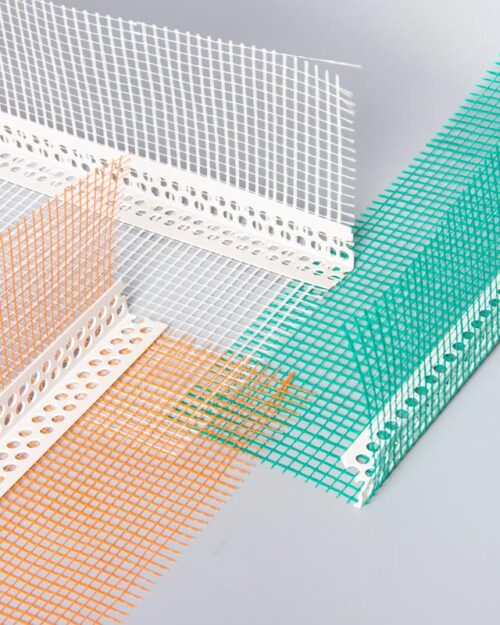 Fireproof High Temperature Fiberglass Mesh Fabric for Wholesale Equipment Cover Projects from a China Textile Mill | 60 g/m² | 150 cm
 Antibacterial Flame Retardant Medical Mesh Polyester Fabric for Clinical Environment Projects | 300 g/m² | 50 cm | BS 5867 Type C
 Inherent Flame Retardant High-Strength Para-Aramid Mesh Fabric with Wear Resistance for Workwear | 260 g/m² | 150 cm | EN ISO 11612
 Fireproof Aramid Mesh Fabric Firefighting Suit Lining with Wear Resistance for Workwear | 260 g/m² | 150 cm | EN ISO 11612
Many products are called “FR mesh fabric,” but that name alone is not enough.
Before buying, it is better to check:
The final use must be clear first.
For curtain or decorative projects, the buyer may need NFPA 701.
For industrial protective clothing, standards such as EN ISO 11612, EN ISO 11611, or other workwear-related requirements may be involved.
For transport interiors, the project may ask for burning behavior, smoke, toxicity, abrasion resistance, or other industry-specific tests.
The common mistake is using the wrong standard for the wrong application.
A decorative FR mesh may not be suitable for workwear. A garment lining mesh may not be suitable for transport interiors. A mesh used for curtain tops may not meet the same requirements as protective clothing mesh.
They may all look like mesh, but the testing logic is different.
For FR mesh fabric projects, BEGOODTEX usually starts with a few basic questions:
If the mesh is used in industrial uniforms or protective clothing, we focus on flame-retardant stability, breathability, comfort, wash resistance, and garment-level testing.
If it is used for hospital cubicle curtains or public space materials, we also look at airflow, dimensional stability, antibacterial needs, and project documentation.
If it is used in transport or interior applications, abrasion resistance, strength, smoke toxicity, and industry standards need to be checked more carefully.
For example:
The clearer these details are, the easier it is to choose between inherently FR mesh and post-treated FR mesh.
Mesh fabric is light, breathable, flexible, and useful in many products, from sportswear and workwear to curtains, seats, and functional textiles.
But ordinary mesh fabric is not automatically fire-safe.
Most ordinary polyester, nylon, cotton, or blended mesh fabrics may burn if they are not made with flame-retardant design.
The value of flame-retardant mesh is that it improves fire safety while keeping as much breathability and comfort as possible.
It can be made with inherently flame-retardant fibers, or through post-treatment and coating. The right option depends on the final product, use environment, washing needs, risk level, and required standard.
When sourcing mesh fabric, do not stop at the name “FR mesh fabric.”
The real questions are:
Small mesh panels are easy to overlook. But in protective clothing, hospital cubicle curtains, industrial uniforms, and public space projects, these small parts can still affect the safety and approval of the whole product.
Most ordinary mesh fabrics are not naturally flame-retardant. Polyester, nylon, cotton, and blended mesh may burn if they are not specially designed for flame retardancy. If fire safety is required, ask for FR mesh fabric and check the test report.
Yes. But it depends on the fiber, structure, and flame-retardant method. Inherently FR mesh usually keeps better breathability and hand feel. Coated or post-treated FR mesh may become stiffer or less breathable, so sample testing is important.
For long-term use, repeated washing, or protective clothing, inherently FR mesh is usually more stable. For short-term, low-frequency, or budget-sensitive projects, post-treated FR mesh may be considered, but wash testing should be confirmed.
It is commonly used in industrial uniforms, protective clothing, breathable workwear panels, hospital cubicle curtain top mesh, automotive interiors, transport interiors, and public space materials.
Not just because the name says “FR mesh.” Protective clothing needs the right standard, garment structure, washing requirements, and test scope. Decorative FR mesh may not be suitable for protective garments.
Start with the final use. Then confirm fiber composition, mesh structure, flame-retardant method, fabric weight, strength, elasticity, wash durability, testing standard, and report coverage.