Get in touch
Thank you for reaching out! Please tell us more about your needs — our expert team will get back to you within 24 hours.




This question isn’t simple to answer, because no fabric is completely fireproof. However, some fabrics have excellent flame-retardant properties, meaning they can stop burning quickly after contact with fire. That greatly reduces the danger. In this article, we explain in simple terms the burning characteristics of different fabrics and how to choose safer materials.

Polyester, nylon, spandex, and acrylic all have low melting points and can melt and burn quickly when exposed to fire. The melted material may stick to the skin and cause severe burns, and these fibers also release toxic fumes that harm the respiratory system. Typical examples: stockings, mesh fabric, synthetic chiffon.
Thin fabrics such as sheer cloth or light cotton burn faster because of their low weight and open structure.
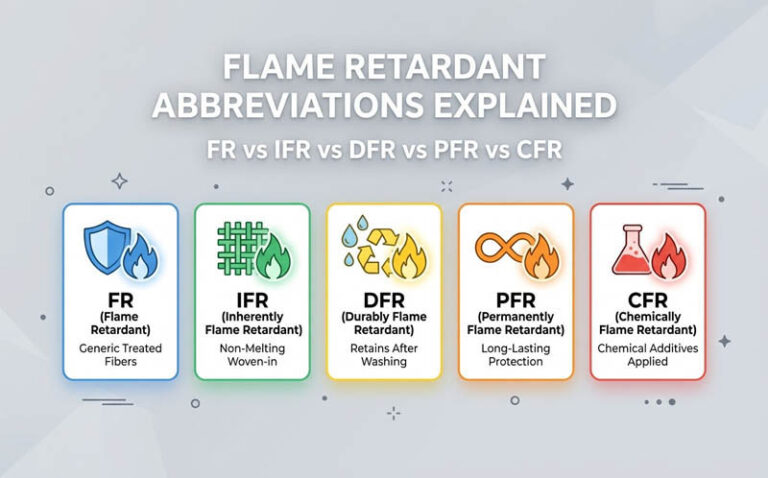
These fabrics are specially treated to slow down burning and self-extinguish once removed from fire. They are widely used in firefighting gear and protective clothing.
Flame-retardant fabrics do not mean they won’t burn at all. They slow the fire, control the burning speed, and self-extinguish once removed from the flame. Flame-retardant cotton, for example, can stop burning within 12 seconds, giving the wearer valuable escape time.
No. Every textile will eventually burn or degrade under enough heat. What flame-retardant fabrics do is resist ignition, slow flame spread, and self-extinguish once the ignition source is removed — flame-retardant cotton, for instance, stops burning within about 12 seconds.
Synthetics such as polyester and nylon have low melting points. They melt and drip, and the molten material sticks to skin, causing deeper burns. Cotton burns but does not melt or drip.
Wool self-extinguishes when removed from a flame and has a relatively high ignition temperature, which makes it one of the safer natural fibers — though it is still not a certified flame-retardant material for regulated public spaces.
Look for a certified test report against the standard your project is audited to — NFPA 701 for drapery, EN 13501-1 for building products, CA 117 for upholstered furniture — and check that it covers the exact fabric construction and finish you are buying.
No fabric is completely fireproof, but understanding how different materials behave in fire helps you choose safer options. Natural fibers and flame-retardant treated fabrics are the best choices, especially in fire-prone environments. Choosing the right clothing materials means better safety for you and your family.