Enter your details and we will send the requested document to your inbox.





An arc flash is the “invisible killer” of the electrical world. In a split second, an arc fault can reach temperatures of 19,000 °C — hotter than the surface of the sun. For workers wearing standard clothing, or even low-quality flame-resistant (FR) gear, the results are catastrophic: the fabric does not just catch fire, it can melt into the skin. Many buyers pick workwear labeled “FR” and assume they are safe, but being flame-resistant is not the same as being arc-rated. That gap is exactly what ASTM F1506 closes. It is the performance benchmark that separates basic safety T-shirts from professional electrical protection, and it is the standard OSHA points to for arc-flash PPE compliance.
Quick answer: ASTM F1506 is the U.S. performance standard for arc-rated (AR) workwear worn by electrical workers. It defines how a fabric must behave in an arc flash — self-extinguishing, no melt or drip, and protection that survives 25 industrial wash cycles — and it is the benchmark cited by OSHA 1910.269 for arc-flash protective clothing.
ASTM F1506 is the performance specification and “rulebook” for protective clothing worn by electrical workers. It tells manufacturers exactly how a fabric must behave when exposed to extreme heat and an electric arc. It ensures fabrics will not ignite or melt during an arc flash by setting strict requirements for vertical flame tests and specific Arc Ratings (cal/cm²). If your gear is not ASTM F1506 compliant, it is not legally “arc-rated,” and it will not deliver the protection a live-panel job demands. The full ASTM F1506 specification is maintained by ASTM International and defines the exact test methods and acceptance criteria referenced throughout this guide.
The standard applies to a wide professional audience. Anyone working on energized parts or industrial control panels — electricians, technicians, utility linemen, and maintenance crews in high-voltage plants — falls under its scope. The industries that rely on it are just as broad: public utilities (power, water, gas), petrochemical and oil & gas, renewable energy (solar and wind farm maintenance), and large-scale manufacturing and construction.
For buyers, the practical takeaway is simple: treat ASTM F1506 as the entry ticket, not the nice-to-have. When you are specifying protective clothing, an arc-rated workwear compliance guide helps you map the standard onto real garments, labels, and job tasks so you do not over- or under-buy.
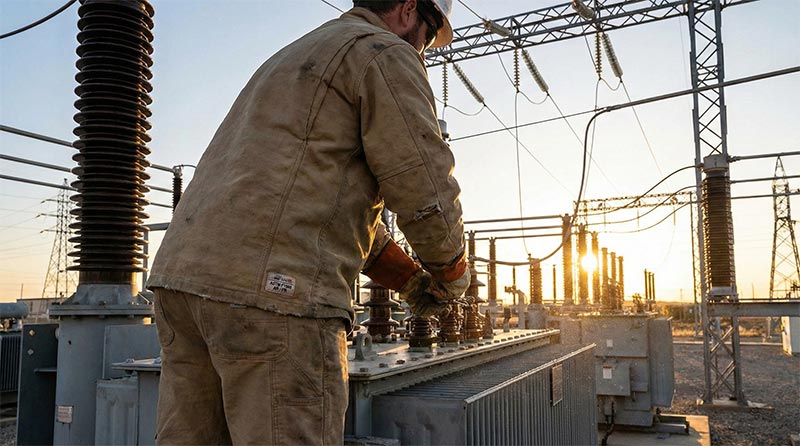
This standard covers almost everything an electrical worker wears as part of the protective layer. FR shirts, pants, coveralls, cold-weather jackets, and even undershirts all need this certification if they sit between the worker and the hazard. If a garment is part of your arc-flash defense, it needs to be tested to the spec.
It is just as important to know the boundaries. ASTM F1506 is not for structural firefighting (which follows NFPA 1971), and it is not designed for molten metal splash in a foundry (which follows ASTM F955). It is built specifically for the unique, intense, short-duration heat of an electrical arc — not for burning buildings or pouring steel. Mixing up these standards is a common and dangerous mistake, because a fabric certified for one hazard may fail completely in another.
For a garment to be ASTM F1506 compliant, it must clear several “gatekeeper” tests. Fail even one, and it cannot be sold as arc-rated PPE.
Together these tests define the “floor” for safety. A fabric that misses any metric cannot carry an Arc Rating, and an Arc Rating is the number that lets a safety manager assign the right PPE Category to a task.
The Arc Rating is the most important number on your garment tag. Measured in calories per square centimeter (cal/cm²), it tells you how much heat energy the fabric can block before there is a 50 percent chance of a second-degree burn. In plain terms: a higher number means more protection against a bigger arc.
You will see two related values on the label:
Modern suppliers like BEGOODTEX build arc-rated garments from advanced fibers such as aramid or modacrylic blends. These high-performance materials allow lightweight, breathable shirts that reach a high Arc Rating without the heavy bulk of older fabrics. If you want to see how those fibers translate into finished goods, our aramid-blend arc-rated workwear is a representative example, and the broader aramid protective fabric range covers inherent-FR yarns built for this exact duty.
People often confuse these two, but they play different roles. Think of ASTM F1506 as the tool and NFPA 70E as the instruction manual. ASTM F1506 tells the manufacturer how to build the clothes; NFPA 70E tells the worker which level of protection a specific job requires.
| Feature | ASTM F1506 | NFPA 70E |
| Primary focus | Product performance & manufacturing | Workplace safety & practices |
| Who it is for | Manufacturers and testing labs | Employers, safety managers, workers |
| What it provides | The Arc Rating of the garment | The PPE Category required for the task |
| Testing | Requires strict lab testing (F1959 / D6413) | Focuses on risk assessment |
Reading them together is the only way to stay compliant: the garment carries its rating because of ASTM F1506, and the worker wears the right garment because of the NFPA 70E workplace standard. A risk assessment under NFPA 70E decides the category; ASTM F1506 makes sure the shirt in that category actually performs.
Choosing a fabric is a balance of safety, cost, and comfort, and most professional gear falls into two camps: inherent and treated.
| Feature | Inherent FR (e.g., aramid) | Treated FR (e.g., FR cotton) |
| Protection | Built into the fiber molecules | Chemical finish applied to fabric |
| Wash life | Permanent; never washes out | Can degrade with improper washing |
| Comfort | Often lighter and moisture-wicking | Feels like heavy denim or cotton |
| Cost | Higher upfront cost | Lower upfront cost |
The mechanism behind treated FR cotton explains why a chemical finish can wash out, while the aramid vs FR cotton comparison lays out where each fiber wins on durability, weight, and total cost of ownership. For outdoor utility work, look for high-visibility fabrics with UV resistance; for indoor maintenance, lightweight fabrics with high breathability (CFM) keep crews productive. The right answer depends on your hazard profile, not on which fabric is “best” in the abstract.
 Inherent Flame Retardant Aramid Mesh Fabric for Industrial Safety Clothing with Custom Production Options | 260 g/m² | 150 cm | EN ISO 11612
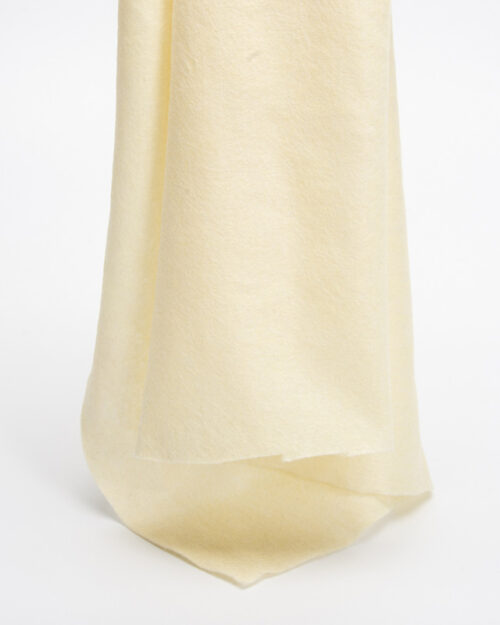 Inherent Flame Retardant Lightweight Aramid Spunlace Felt with Wear Resistance for Equipment Covers | 70 g/m² | 155 cm | EN ISO 14116
 Inherent Flame Retardant Lightweight Aramid Mesh Fabric for Safety Garment Production | 130 g/m² | 100 cm | EN ISO 11612
Buying arc-rated gear is an investment. Do not waste it on these repeat errors:
ASTM F1506 is the foundation of electrical safety. It guarantees your workwear will not ignite, melt, or lose protection after a few washes, and it gives every garment the Arc Rating that turns a risk assessment into real protection. Focus on the label, choose the right fiber for your environment — inherent aramid for permanent protection, treated cotton for lower upfront cost — and never compromise on the rating. When you are ready to specify materials, browse our workwear fabric range or contact our team for OEM and certification support.
Yes. OSHA 1910.269 requires employers to ensure that employee clothing does not increase the extent of injury during an arc flash. ASTM F1506 is the industry-recognized standard used to meet that legal requirement, so compliant AR clothing is effectively mandatory wherever the rule applies.
Yes, but follow the tag carefully. Use mild detergents, avoid bleach and fabric softeners, and never wash AR gear with highly flammable oily rags. Inherent-FR garments keep their protection for life; treated-FR cotton depends on the wash routine, so the wrong detergent can quietly strip the finish.
Inherent fabrics last until the garment is physically worn out (holes or tears). Treated fabrics typically last 25 to 50 washes, but protection can drop faster if harsh chemicals or high heat are used. Inspect regularly and retire gear that shows char, thin spots, or heavy wear.
ASTM F1506 is written for arc flash. Many AR fabrics also pass NFPA 2112 (flash fire), but you must check the label for both certifications if your environment has both hazards. One standard does not automatically cover the other.
According to NFPA 70E, PPE Category 2 requires a minimum Arc Rating of 8 cal/cm². Always confirm against your site’s specific risk assessment before choosing, because the category — and therefore the required rating — follows the task, not the garment.