Get in touch
Thank you for reaching out! Please tell us more about your needs — our expert team will get back to you within 24 hours.




Polyester flame-retardant fabric can easily give buyers the wrong impression.
It seems like it can be used almost everywhere.
Curtains, blackout fabric, hospital cubicle curtains, stage drapes, upholstery, bedding, table covers, tents, fabric air ducts, transport interiors — polyester FR fabric appears in all of these areas. Polyester also has decent strength, manageable cost, good color options, and many width choices.
So many buyers start with a simple thought:
“Let’s just use polyester FR fabric. It should be fine.”
That is often where the problem begins.
Polyester flame-retardant fabric is practical, but it is not a universal fabric. A fabric described as “polyester flame retardant fabric” may work very well for hotel curtains, but it may need a completely different review if it is used for industrial protective clothing. It may be suitable for blackout curtains, but not for high-heat protective garments.
Many project delays do not happen because the fabric is poor. They happen because the final use was not made clear at the beginning.
When polyester FR fabric is used in the right place, it is a strong solution. When it is used in the wrong place, it can become a problem.
We often receive inquiries like these:
“We need 150 cm wide polyester flame-retardant fabric.”
“Please offer something cheaper, with certificate.”
“It would be good if the fabric can be used for both curtains and workwear.”
These requests sound clear, but they are still missing the most important information.
Curtains and workwear are completely different products.
Curtains need drape, blackout performance, color stability, hanging effect, and fire approval for interior use.
Workwear needs to consider wearing time, sweat, friction, washing, movement, and the type of workplace risk.
If buyers only look at the words “polyester FR,” it is very easy to mix up two very different fabric directions.
For example, a hotel blackout FR fabric may feel firm, hang beautifully, and give excellent blackout performance. It may be perfect in a guest room. But if the same fabric is made into workwear, workers may find it stiff, hot, and uncomfortable.
The opposite can also happen. A lightweight FR fabric designed for garments may feel good on the body, but when used as curtains, it may not have enough drape or blackout effect.
So the first step in buying polyester flame-retardant fabric is not comparing prices.
It is answering one simple question:
What will this fabric finally become?
That answer decides almost everything that follows.

Polyester is common, but ordinary polyester should not be treated as a flame-retardant material.
When exposed to flame, ordinary polyester may burn, shrink, melt, or even drip. To make polyester fabric flame-retardant, the fabric usually needs a flame-retardant design in the fiber, polymer, finishing process, or coating.
Some polyester FR fabrics are inherently flame-retardant. Their flame-retardant performance comes from the fiber system itself.
Others are made from ordinary polyester fabric and then given flame-retardant performance through finishing or coating.
At the sample stage, these two fabrics may not look very different. But after long-term use, washing, rubbing, and maintenance, the difference can become much clearer.
Inherently FR polyester is usually a better choice for long-term projects such as hotel curtains, hospital cubicle curtains, school curtains, and public building decorative fabrics. These products need to hang for a long time, be cleaned, be handled, and still keep their appearance and flame-retardant performance.
Post-treated FR polyester has its own place. It can offer lower cost and more development flexibility. It may work for short-term events, low-wash decorative projects, or budget-sensitive orders.
But if the project requires the fabric to still pass testing after repeated washing, buyers should not rely only on the initial test report.
Some buyers ask only, “Can it be flame-retardant?” at the beginning. Later, they discover that the project also needs after-wash test data. By then, the sample may already be approved and bulk color may already be prepared. Changing the fabric at that stage can affect both cost and lead time.
Polyester FR fabric is popular for good reasons.
It has stable strength, shrinkage is usually easier to control, color options are broad, and bulk consistency is more manageable than many other materials. For curtains, it can offer good drape and appearance. For blackout fabric, it can work with coating, black yarn, or laminated structures. For hospital cubicle curtains, it can also be combined with antibacterial finishing, washable construction, and top mesh design.
For hotels, schools, offices, hospitals, and public space projects, these advantages matter.
The buyer is not only buying one piece of fabric. They need stable color, suitable width, reliable delivery, and a fabric that can be reordered later without too much trouble.
But the limits of polyester also need to be clear.
If the project involves welding sparks, electric arc, high heat contact, molten metal, firefighting, or other high-risk working conditions, ordinary polyester FR fabric should not be recommended too quickly.
Even if the fabric has flame-retardant performance, the final decision still depends on the risk type, garment structure, and required standard.
Some product pages like to list many standards together.
NFPA 701, BS 5867, EN 13773, NFPA 2112, ASTM F1506, EN ISO 11612…
It looks professional. It may also make buyers feel more confident.
But procurement does not work that way.
A curtain fabric that passes NFPA 701 does not automatically become suitable for industrial protective clothing.
A fabric designed for protective garments may not be suitable for hotel blackout curtains.
A basic polyester FR fabric may also need to be checked again if coating, printing, lamination, or quilting is added later.
A safer order is:
product first, market second, standard third.
For hotel curtains in the United States, NFPA 701 may be the main concern.
For contract curtains in the UK, BS 5867 may be required.
For public building curtains in Europe, EN 13773 or local requirements may be involved.
For protective clothing, then it makes sense to discuss EN ISO 11612, EN ISO 11611, NFPA 2112, ASTM F1506, or other related standards.
More standards do not always mean a better fabric.
The right standard is what matters.
Many problems do not show up when the sample is new.
Then the real use begins.
Curtains become stiff after washing.
Hospital cubicle curtains shrink.
Workwear fabric changes color.
Or the customer suddenly asks for a flame-retardant report after washing.
Only then does everyone realize that wash durability was not clearly discussed at the start.
For polyester flame-retardant fabric, washing performance is related to the flame-retardant method, finishing process, coating, and washing conditions.
Some polyester FR fabrics can keep their performance after repeated washing, but buyers should always check the actual fabric, test standard, washing method, and test report.
A claim like “30 washes” sounds simple, but the details behind it can be very different.
For hotels, hospitals, schools, and workwear projects, washing conditions should be discussed before sampling.
Otherwise, a fabric may pass the first test but still need to be retested later because the washing requirement was not clear.
When buying flame-retardant fabric, some buyers naturally prefer thicker fabric.
A heavier fabric looks stronger. It also feels safer.
But fabric weight does not work that simply.
Hotel curtains need enough weight to hang well and support blackout performance.
Stage drapes may need a heavy look, but the hanging system also has a load limit.
Hospital cubicle curtains that are too heavy can be harder to remove, wash, and reinstall.
Workwear that is too heavy can make workers tired, especially in hot workshops or outdoor environments.
Lightweight fabric is not automatically bad either. It may be more breathable, more flexible, and better for wearing comfort. The key is to confirm strength, abrasion resistance, flame-retardant performance, and washing behavior.
So fabric weight should always be judged together with the application.
The same 300 g/m² fabric can feel very different as a curtain, a jacket, or upholstery.
Do not judge the fabric only by the number. Look at how it hangs, how it wears, and how it behaves after washing.
 800 g/m² Nylon Flame Retardant Area Rug with Anti-Slip Backing for Contract Grade Supply
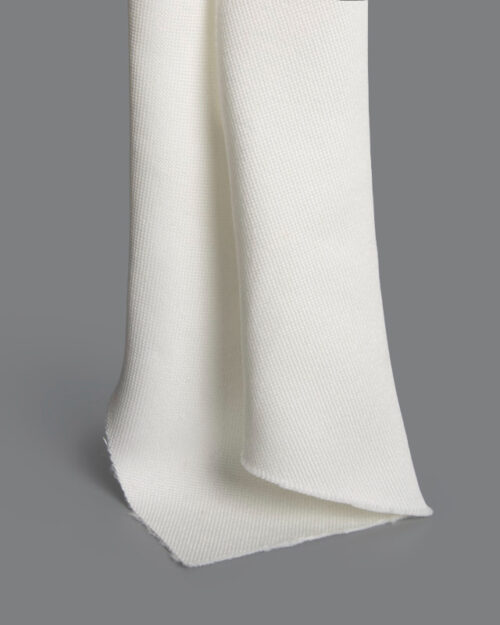 Rice White Flame Retardant Nylon Fabric 300 g/m² for Aviation FAR 25.853 Bulk Purchase
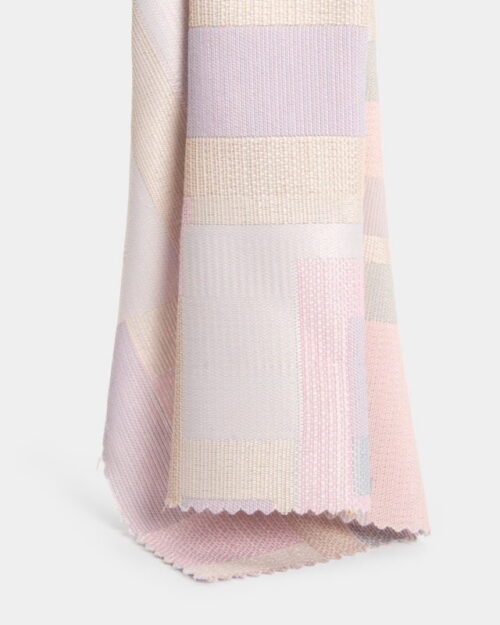 Flame Retardant Jacquard Fabric 280cm Width NFPA 701 Bulk Order-Bespoke Medical Fabric Systems
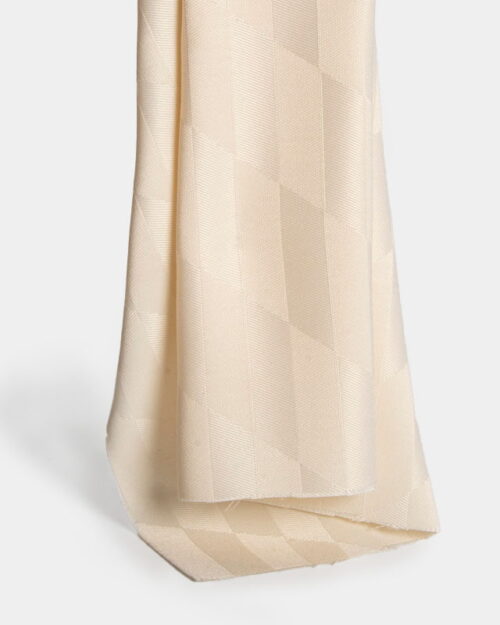 Inherent Flame Retardant Rhombus Jacquard Fabric NFPA 701 Factory Direct-Hygiene Focused Partition Designs
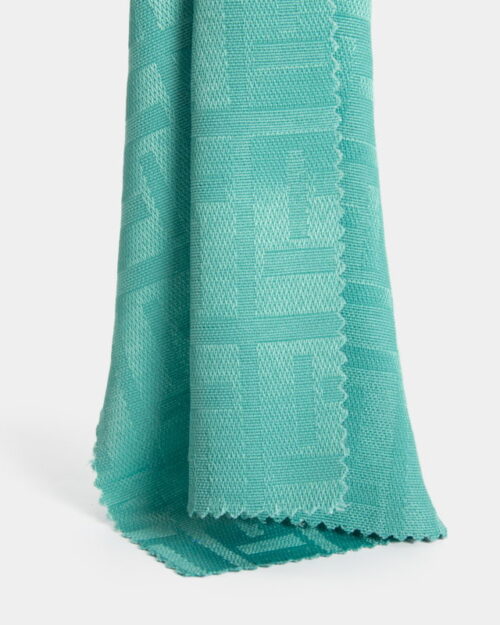 Inherent Flame Retardant Jacquard Fabric for Curtains NFPA 701 Factory Direct-Premium Grade Medical Drapes
In protective clothing and workwear projects, comfort is often left until the end.
At the beginning, everyone talks about standards, reports, price, and delivery. After the garments reach the worksite, workers start to complain:
Once these complaints appear, the problem has already reached the user.
Polyester FR fabric can be made more comfortable through fabric structure, yarn selection, weight, and finishing. For example, mesh structures can improve airflow. Finer yarns can improve touch. Proper finishing can make the fabric softer.
But every change may also affect flame-retardant testing, wash durability, cost, or lead time.
That is why fabric samples are important.
A report tells you whether the fabric passed a test.
A sample tells you whether the fabric makes sense in real use.
Curtain projects have similar issues.
These are not things a test report alone can answer.
In the past, many buyers only asked about flame retardancy.
Now, more buyers continue with questions about OEKO-TEX, REACH, PFAS-free, halogen-free, GRS, or other environmental documents.
This is especially common in hotels, hospitals, schools, children’s spaces, bedding, export projects, and green building projects.
If polyester FR fabric includes water repellency, oil repellency, antibacterial finishing, blackout coating, or other functional treatments, buyers will pay more attention to the chemical system.
Passing a flame test does not mean the chemical safety documents are complete.
We have seen export projects where the early discussion was only about flame retardancy and price. Later, during brand review, the buyer asked for PFAS-free documentation. Only then did the supplier realize that the original finishing route was not suitable.
At that point, changing the finishing process or arranging new testing can delay the project.
Environmental documents should not be left until the buyer asks for them.
If the project has chemical safety requirements, they should be discussed from the beginning.
Polyester flame-retardant fabric is often strongest in commercial interiors and functional textile projects.
Common applications include:
These projects need more than one performance point. They need flame retardancy, appearance, cost control, color stability, width options, supply stability, and sometimes additional finishing.
Polyester is strong because it balances many of these needs well.
But if the project moves into high-risk industrial protection, buyers need to be more careful.
Welding, electric arc, molten metal, and high-heat protection should not be judged only by the words “polyester FR.”
Those projects need to be reviewed together with the right standard, hazard level, garment design, and actual test results.
In other words, polyester FR fabric is suitable for many projects, but it has to be used in the right place.
When we receive an inquiry for polyester flame-retardant fabric, Begoodtex usually does not recommend a fabric based only on the phrase “polyester FR fabric.”
We first try to understand the project.
For hotel curtains, we look at blackout performance, drape, width, color, flame-retardant standard, and cleaning method.
For hospital cubicle curtains, we also check antibacterial requirements, top mesh, removability, shrinkage, and certificate coverage.
For stage drapes, we consider weight, dark color performance, hanging method, and flame-retardant report.
For workwear or protective clothing, we need to know the risk type, wearing environment, washing times, and garment-level testing requirements.
This kind of discussion may feel slower than sending a quick price, but it avoids much bigger problems later.
Some projects are better suited to inherently FR polyester.
Some can use post-treated FR polyester.
Some need blackout, antibacterial finishing, mesh, jacquard, lamination, or environmental documents.
And some projects may not be the best fit for polyester at all.
When these decisions are made early, testing, sampling, and bulk production become much smoother.
Is polyester flame-retardant fabric good?
Usually, the answer is:
It depends on where it is used.
Polyester FR fabric is durable, cost-friendly, easy to color, and available in many widths. It works well for many curtain, cubicle curtain, interior, bedding, tent, upholstery, and functional textile projects. For commercial projects that need bulk stability and cost control, it can be a very competitive material.
But buyers should not judge only by the name “polyester FR fabric.”
You need to know what the fabric will become, which market it will enter, which standard it needs to meet, whether it will be washed, whether coating, blackout, antibacterial finishing, printing, or lamination will be added, and whether OEKO-TEX, PFAS-free, halogen-free, or other environmental documents are required.
Once these points are clear, polyester FR fabric can become a real advantage for the project.
If they are not clear, the same fabric may lead to extra testing, material changes, and delivery delays.
A fabric that looks suitable is not always suitable for the whole project.
The safest start is to make the application, standard, and maintenance method clear before choosing the fabric.
Ordinary polyester should not be treated as a flame-retardant material. Polyester flame-retardant fabric usually gets its FR performance through inherently flame-retardant fiber, flame-retardant modification, finishing, or coating.
It depends on the risk type. Polyester FR fabric is more commonly used for curtains, cubicle curtains, interiors, and commercial textiles. For welding, electric arc, high-heat protection, or similar risks, buyers need to check the relevant protective clothing standards and garment-level testing.
For long-term use, repeated washing, and projects that need stable bulk performance, inherently FR polyester is usually a better direction. For short-term, low-wash, or budget-sensitive projects, post-treated FR polyester can be considered, but after-wash reports should be checked.
There is no single answer. It depends on the fabric structure, flame-retardant method, washing condition, and test report. Do not rely only on a marketing number. For hotels, hospitals, and workwear projects, after-wash testing requirements should be confirmed early.
It is commonly used for hotel curtains, office blackout curtains, school curtains, hospital cubicle curtains, stage drapes, upholstery, bedding, table covers, roller blinds, tents, fabric air ducts, transport interiors, and some functional textile products.
The most common mistake is not explaining the final use clearly. Curtains, bedding, cubicle curtains, interiors, and workwear have different standards, hand feel requirements, washing needs, and report scopes. Buyers should not decide only based on the name “polyester FR fabric.”